
Better values make the IBC work better. Clear methods, set rules, reports on time and valuers who stand apart all help. Lenders then trust the figures, and cases close faster.
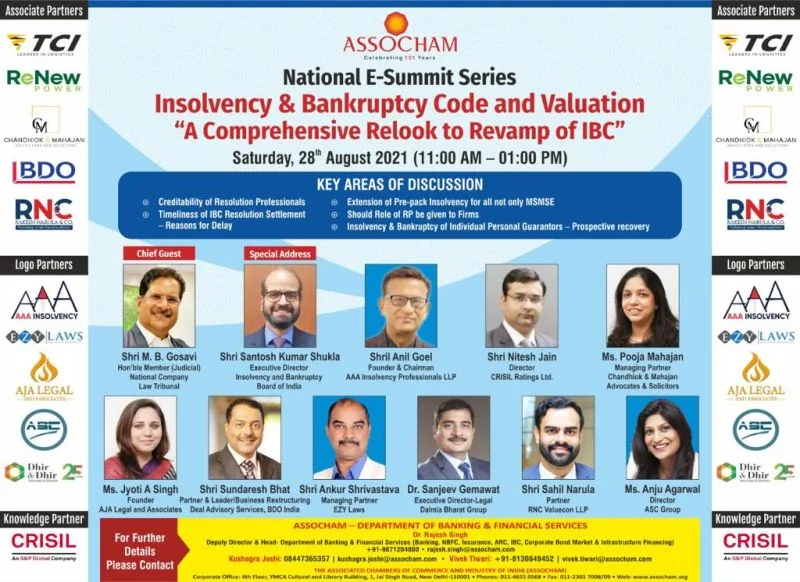
RNC moderated the final discussion at the National E-Summit run by ASSOCHAM on this topic.
Key points
- The value shapes each rescue plan, how much lenders get back and what the lenders' group (CoC) decides.
- Mixed methods, poor data and thin training cause fights and delays.
- Ideas for reform include new IBBI rules, one shared method and records good enough to audit.
- Better values mean faster cases, fewer court fights and more money back.
Why does IBC valuation need a fresh look?
The IBC was a big reform. It made it faster to deal with firms that cannot pay their debts. But putting a value on those firms is one of its most vital parts, and one of the most overlooked.
Firms, law makers and valuers now agree that these values must be more exact, more consistent and more open.
In IBC cases, the value of the debtor's assets and business directly affects:
- The outcome of resolution plans
- How much creditors recover
- How the committee of creditors (CoC) decides
Yet the values are often challenged. People say they rest on opinion, differ from valuer to valuer or use unclear methods.
What are the problems with IBC valuation today?
- Mixed methods: valuers may use different approaches, such as DCF, NAV or market multiples, so results vary.
- Poor data: limited access to live accounts and asset records hurts accuracy.
- Gaps in skill: some valuers do not know enough about firms in trouble.
- Fights over plans: gaps between the forced-sale value and the fair value often lead to court cases and delays.
These problems show the need for one clear, shared approach.
What does the fresh look involve?
Committees and think tanks now suggest:
- Updated guidance from the Insolvency and Bankruptcy Board of India (IBBI)
- One shared way to value assets of firms in trouble
- Records from valuers good enough to audit
- More use of tech for faster, more exact values
What does RNC suggest?
RNC welcomes the review. Our experts believe these steps would add lasting value:
- Check each value against industry norms
- Have two valuers review each case, for more trust
- Audit the value in large or disputed cases
- Train new valuers
- Build a national record of past IBC values
Following global rules would make the process smoother.
What will better valuation achieve?
A strong, open valuation system will:
- Speed up insolvency cases
- Cut the risk of court fights
- Raise bidder confidence and interest
- Improve recovery for creditors
As India refines its insolvency system, valuation reform must stay central. Read our guide to valuation under IBC.
Why choose RNC for IBC valuation?
RNC Valuecon LLP has valued assets and firms for over four decades. We bring deep skill, care for the rules and high ethics to every IBC case. Explore our CIRP valuation services or talk to a valuation expert.
Frequently asked questions
Why does the quality of valuation matter under the IBC?+
The CoC judges rescue plans against fair value and liquidation value. Weak values mean lenders get less back and more cases go to court.
What makes IBC valuations better?+
Follow the valuation standards. Get the data early. Stay independent. And keep clear, open records.
Sources and standards
The regulators and standard setters whose rules apply to this topic. Rules change, so check the current text before relying on it.
- Insolvency and Bankruptcy Board of India (IBBI): Insolvency and Bankruptcy Code, 2016 and CIRP Regulations, 2016
- Ministry of Corporate Affairs: Companies Act, 2013 and Companies (Registered Valuers and Valuation) Rules, 2017
- International Valuation Standards Council: International Valuation Standards (IVS)