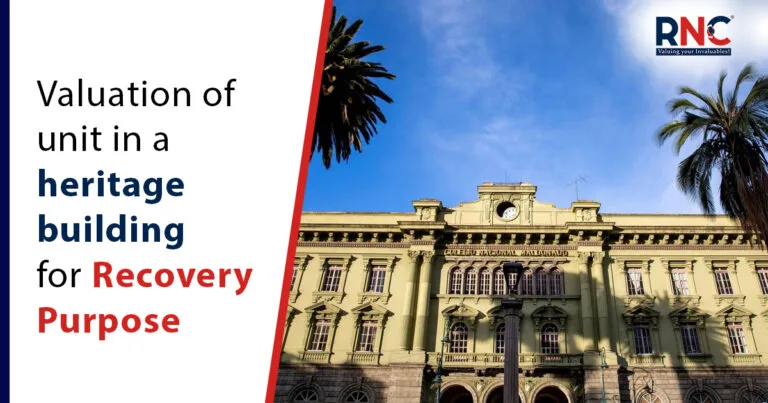
Heritage buildings come with limits on changes, on rebuilding and at times on use. Repairs can cost a lot. A recovery valuation must show all this. It uses comparables that are adjusted with care and a true distress value, so the bank knows what an auction might bring.
How it usually unfolds
A bank is recovering a loan secured on an office unit in a listed heritage building in the heart of the city.
We check the heritage rules, the state of the building and who must pay for repairs. We look for sales in similar buildings. Plain commercial comparables are adjusted for the limits on rebuilding and use.
The bank gets a fair value and a distress value it can rely on to set the reserve price. The real case study below describes the job.
Illustrative scenario drawn from the kinds of mandates RNC handles. It does not describe a specific client. The case study below is a real engagement.
What changes the value
| Decision point | Why it matters |
|---|---|
| Heritage rules | Limits on rebuilding put off some buyers. |
| Repair costs | Owners may have to share costly repairs to the structure. |
| Distress value | Auctions of unusual assets mostly need a bigger discount. |
What to have ready
- Title and society papers
- Heritage listing and its rules
- Reports on the state of the building
- Loan and recovery papers