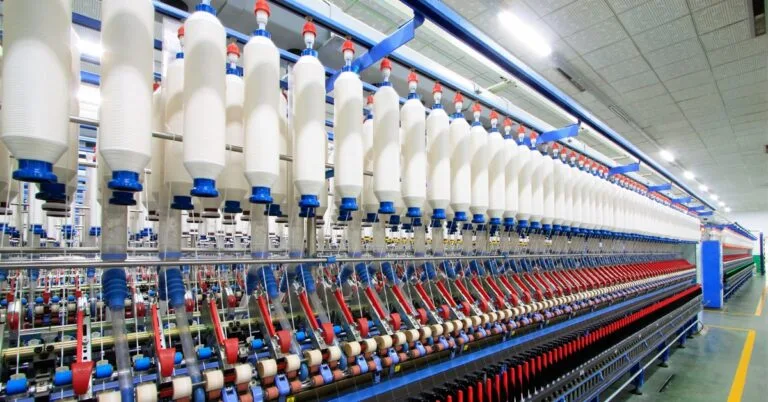
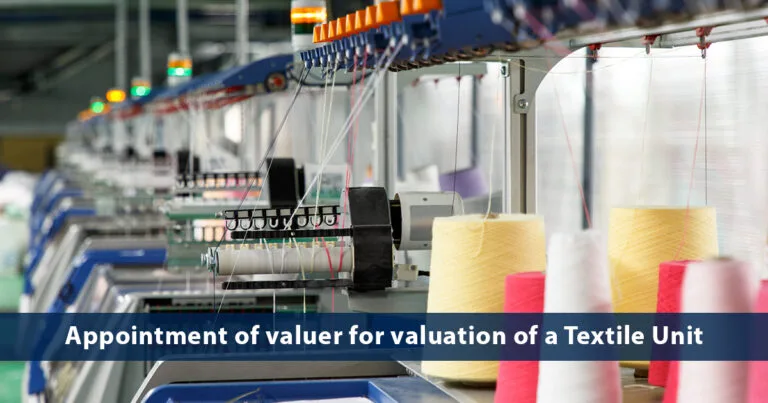
Textile industry valuation looks at how old the machines are and what technology they use. It also looks at how much they run, the cost of power and raw material, and the land the unit sits on. Bank and IBC valuations lean on the cost approach for machinery, with resale prices for standard machines. Insurance valuations set the reinstatement value of plant and stock.
When does textiles & garments need a valuation?
| Trigger | What is needed | Rule or source |
|---|---|---|
| Unit goes into CIRP | Fair value and liquidation value | CIRP Regulations |
| Bank loan or renewal | Security value of the plant and property | Lender policy |
| Insurance renewal or a loss | Reinstatement value; loss assessment | Policy terms |
| Textile park or project loan | TEV study and lender’s engineer | Lender rules |
Which valuation method fits?
| Asset or situation | Approach we use |
|---|---|
| Spinning and weaving machinery | Depreciated replacement cost; resale prices for standard machines |
| Polyester and synthetic yarn plants | Cost approach, less a cut for old technology; extra cases if the plant is idle |
| Textile parks and warehouses | Sales comparison, and the income approach for leased units |
| Yarn and fabric stock | Net realisable value |
Why did a polyester yarn factory fail, and what was left to value?
A polyester yarn factory became insolvent. Weak markets and running costs both played a part. Lenders asked what the plant could fetch. Which lines would a buyer run? Which were out of date? And what were the land and buildings worth? Read the case study.
What does a lender need from a textile unit valuation?
A lender asked us to value a textile unit. The brief was a clear security value. That meant the state of the machines and what they would resell for, the buildings and land, and a realistic distress value. Read the case study.
How should a spinning mill insure its assets?
We advised a spinning and yarn maker on insurance. The sums insured now match the reinstatement value of the machines and stock. This closed gaps that the average clause would have exposed in a claim. Read the case study.
Pitfalls we see most often
- Valuing old machines at replacement cost. Technology moves fast in spinning and weaving.
- Leaving out power cost. It decides whether a buyer can run the unit at a profit.
- Too little cover for stock. Peak-season stock is often more than the declared sum insured.
- Forgetting the land. In many textile units, the land and buildings hold much of the value.